
Insights
P50, P90, and which one belongs in which number.
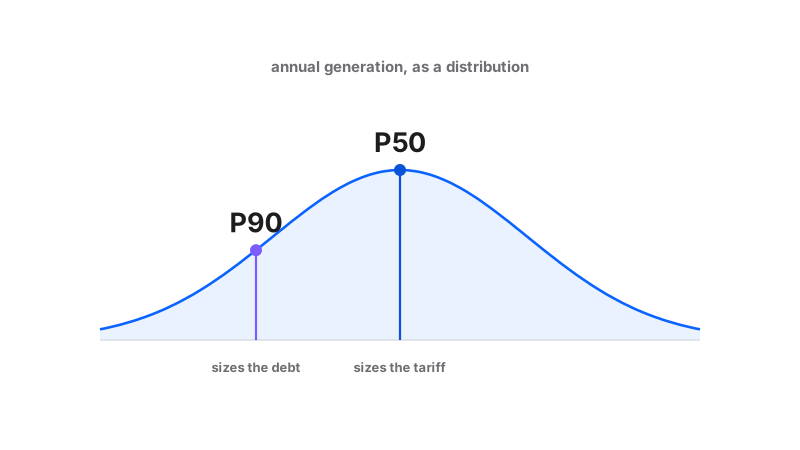
P50 belongs in the tariff you bid. P90 belongs in the debt the lender will size. Using one where the other belongs is the most common quiet error in a first bid model.
Exceedance, in one paragraph
Generation estimates are not single numbers, they are distributions. Some years the resource is good, some years it is not. A P50 estimate is the level you expect to exceed in half of all years — the central case. A P90 is the level you expect to exceed in ninety percent of years — a deliberately conservative case, chosen so that being wrong is unlikely rather than merely possible. P90 is therefore always the lower number.
That is the whole of the statistics. The part that costs money is knowing which of the two goes where.
The two-line rule
Where each number belongs
P50 sizes the tariff. It is the honest central expectation, and bidding off anything else either loses the bid or wins it at a price you did not mean.
P90 sizes the debt. The lender is not asking what you expect; they are asking what happens in a bad year and whether the loan still services.
Both numbers are correct. They answer different questions, asked by different people, with different consequences for being wrong. Your bid is a claim about the expected case. Your debt is a promise about the bad case.
What happens when they are swapped
The failure mode is not dramatic and that is exactly why it survives review. A model built entirely on P50 produces a debt service coverage ratio that looks comfortable, because the generation feeding it is the expected number rather than the stressed one.
Take an illustrative project and size the same debt twice.
| Sized on P50 | Sized on P90 | |
|---|---|---|
| Annual generation | 100 units | 92 units |
| Revenue at the same tariff | 100 | 92 |
| Operating cost | 22 | 22 |
| Cash available to service debt | 78 | 70 |
| Debt service | 62 | 62 |
| DSCR | 1.26 | 1.13 |
An eight percent difference in generation becomes a thirteen point difference in coverage. The reason is that operating cost and debt service do not fall with the resource — only revenue does, so the whole shortfall lands on the coverage ratio.
If the covenant in the term sheet is 1.20×, the P50 view clears it and the P90 view does not. Nothing in the model looks broken in either case. The first version simply answers a question the lender did not ask.
About the numbers here
Every figure in this piece is illustrative. They are internally consistent so the arithmetic can be followed end to end, but they are not drawn from any real project, tender or client.
In practice
- Carry both numbers through the model from the start. Retrofitting a P90 case late is where inconsistencies creep in.
- State which basis every headline number is on. “DSCR 1.26” means nothing without it.
- Expect the lender to ask for P90, and sometimes P99 for a single stressed year. Have it ready rather than derived on the call.
- Do not average the two. A blended case answers nobody’s question and hides both.
The next piece is about a word that hides four different events behind one label — and only one of them is anyone’s fault.